Global Bird Festival 2025
Global Bird Festival 2025

🌏 Global Bird Festival Report
Hosted by the Cambodia Bird Guide Association (CBGA)
Date: 12 October 2025
Location: Siem Reap, Cambodia
1. Introduction
The Global Bird Festival, organized annually by the Cambodia Bird Guide Association (CBGA), is a vibrant celebration of bird migration and conservation. Held each October, the festival brings together bird enthusiasts, conservationists, families, and community members to honor the awe-inspiring journeys of migratory birds. Through immersive experiences and educational programming, the event fosters a deeper understanding of the ecological roles these birds play and the urgent need to protect their habitats.
2. Objectives of the Festival
The festival was guided by four core objectives:
- 🐦 Raise Awareness: Promote understanding of the ecological importance of migratory birds and their conservation.
- 📚 Education: Offer workshops and talks to inform participants about bird migration, species diversity, and conservation strategies.
- 🤝 Community Engagement: Encourage local involvement through interactive activities that celebrate wildlife and ecosystems.
- 🌱 Conservation Action: Inspire individual and collective efforts to safeguard migratory routes and habitats.
3. Key Components of the Festival
3.1 Workshops
Interactive workshops provided hands-on learning opportunities, covering topics such as:
- The Science of Bird Migration: Understanding environmental cues and physiological processes.
- Bird Identification: Techniques for recognizing species by sight and sound.
- Photography Skills: Tips for capturing birds in motion and natural settings.
3.2 Bird-Watching Tours
Guided tours led participants into local habitats to observe migratory birds in action. Highlights included:
- Real-time bird spotting with expert guidance.
- Species identification and behavioral insights.
- Exploration of ecosystems vital to avian migration.
3.3 Educational Talks and Panels
Experts in ornithology and conservation shared their knowledge through:
- Keynote Speeches: Covering migratory patterns, threats, and global conservation efforts.
- Panel Discussions: Featuring diverse perspectives on bird protection strategies.
3.4 Family-Friendly Activities
To ensure inclusivity, the festival featured engaging activities for all ages:
- Art and Craft Stations: Children created bird-themed crafts using recycled materials.
- Games and Quizzes: Interactive play that educated through fun.
3.5 Exhibitor Booths
Local organizations and businesses showcased their work and products:
- Conservation initiatives and educational resources.
- Birding gear and eco-friendly merchandise.
- Volunteer opportunities and community programs.
4. Visual and Promotional Strategy
The festival’s branding and outreach efforts included:
- 🎨 Colorful Posters and Graphics: Featuring migratory birds in dynamic settings.
- 📱 Social Media Campaigns: Leveraging Instagram and Facebook to share bird imagery and conservation messages.
5. Conclusion
By the conclusion of the festival, participants had:
- Developed a deeper appreciation for migratory birds and their ecological significance.
- Acquired practical knowledge and tools for bird conservation.
- Built connections with fellow enthusiasts and advocates, strengthening a community committed to protecting avian species.
Are you joining us next year?
Follow us on Facebook and Youtube by clicking on the icons at the bottom of this page!
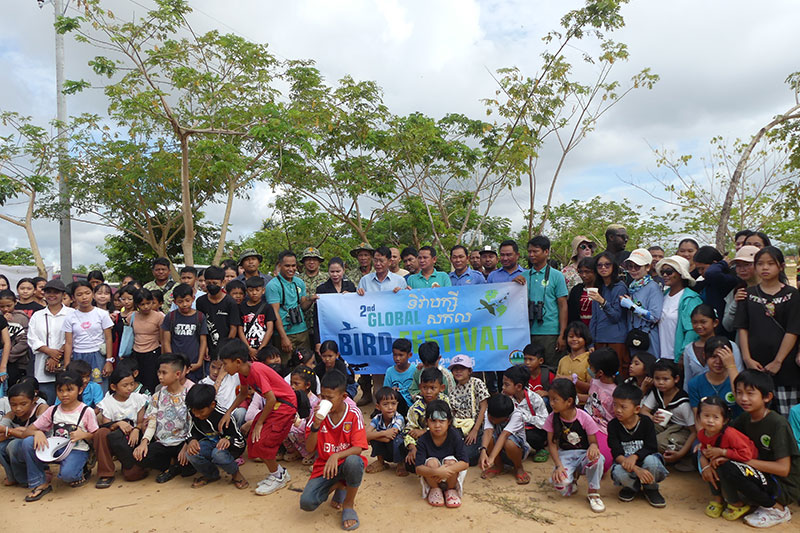
Below are some pictures from the event:


Bird Checklist:
- Indian Spot-billed Duck
- Zebra Dove
- Red Turtle Dove
- Spotted Dove
- Germain’s Swiftlet
- Asian Palm-Swift
- Greater Coucal
- Black Bittern
- Black-crowned Night-heron
- Eastern Cattle-Egret
- Javan Pond-Heron
- Little Egret
- Intermediate Egret
- Eastern Great Egret
- Little Comorant
- Pacific Golden Plover
- Little Ringed Plover
- Kentish Plover
- Temminck’s Stint
- Long-toed Stint
- Common Snipe
- Common Sandpiper
- Wood Sandpiper
- Oriental Pratincole
- Whiskered Tern
- Blue-Tailed Bee-eater
- Common Kingfisher
- Pied Kingfisher
- Black Drongo
- Northern Brown Shrike
- Double Zittng Cisticola
- Plain Prinia
- Yellow-bellied Prinia
- Common Tailorbird
- Striated Grassbird
- Barn Swallow
- Yellow-vented Bulbul
- Black-collared Starling
- Common Myna
- Great Myna
- Pied Bushchat
- Ornate sunbird
- Chestnut Munia
- Scaly-breasted Munia
- Red Avadavat
- House Sparrow
- Eurasian Sparrow
- Paddy-field Pipit
- Chinese pond-Heron
- Streaked Weaver
- Plaintive Cuckoo
- Racket-tailed Treepie
- Indochinese Roller
- Red throated Pipit
- Oriental Reed-Warbler
- Black browed Reed-Warbler