[vc_row][vc_column][vc_custom_heading text=”Trip Extention to Laos PDR” font_container=”tag:h2|text_align:center” css=””][/vc_column][/vc_row][vc_row][vc_column][vc_single_image image=”8140″ img_size=”full” add_caption=”yes” alignment=”center” style=”vc_box_shadow_3d” css=””][/vc_column][/vc_row][vc_row][vc_column][vc_column_text css=””]Our trip to Laos targets the country’s one endemic species, the recently discovered Bare-faced Bulbul, as well as several other rare and range-restricted species in the limestone karst forest such as Red-collared and Pale-headed Woodpeckers, Sooty Babbler and Limestone Leaf Warbler. Na Hin forest has attracted birders around the world to visit this limestone karst after the new species discovered – the Bare-faced Bulbul. Another species restricted to the eastern Indochinese limestone forests is the Limestone Leaf Warbler, a species also described in 2009 and though scarce at this site we will be searching for it as well as Sooty Babbler, a species endemic to the Annamite mountains of Laos and Vietnam, which is found in roving roadside flocks. Moustached, Red-vented and Green-eared Barbets and a range of bulbuls including Grey-eyed and Puff-throated busily feed in the fruiting trees and while scouring the roadside bushes we also hope to find feeding flocks that may contain Red-headed and Orange-breasted Trogons, wintering Blyth’s Leaf Warblers, Erpornis and a large range of woodpeckers, possibly including the seldom-seen Red-collared and Pale-headed Woodpeckers.
Our Tentative Itinerary Day 1: Pickup and transfer to the hotel in Vientiane – Laos for overnight Our guide and driver will pick you up from the airport and transfer to the hotel in Vientiane for overnight or if you already arrive Vientiane then our guide will go & meet you at your hotel to brief the trip itinerary and preparation.
Day 2: Mekong River & Na Hin Forest Early morning, hotel check out then going further north of Vientiane along the Mekong River for Jerdon’s Bush Chat then continuing to Ban Na Hin. Evening birding around Na Hin forest for Bare-faced Bulbul and other species. Overnight Ban Na Hin.
Day 3: Full day Na Hin Forest Full day birding around Na Hin forest for Bare-faced Bulbul and other species such as Pale-headed Woodpeckers, Sooty Babbler and Limestone Leaf Warbler. Overnight Ban Na Hin. *If you have 5days & 4nights then we can add one more day at Na Hin Forest.
Day 4: Na Hin Forest & Vientiane / Vientiane airport Morning birding to find other not-yet seen species or to see again for better view. Then transfer to the airport in Vientiane for flight departure or drop you at your hotel.[/vc_column_text][/vc_column][/vc_row][vc_row][vc_column][vc_single_image image=”8141″ img_size=”full” add_caption=”yes” alignment=”center” style=”vc_box_shadow_3d” css=””][/vc_column][/vc_row]
Enhancing Forest Ponds/Trapeang: A Sustainable Solution to Water Scarcity for Wildlife in Dry Seasons
In regions experiencing prolonged dry spells, the scarcity of water poses a significant challenge for wildlife survival. To mitigate this issue, forest pond (Trapeang) modification has emerged as an effective and eco-friendly solution. By enhancing existing ponds or creating new ones, we can store water strategically, ensuring a reliable water source for animals during the arid seasons.
Trapeang or Forest pond modification involves implementing various techniques to maximize water retention and minimize evaporation. One such method is the construction of small dams or embankments around the pond’s perimeter. These structures help trap rainwater runoff, preventing it from flowing away and instead channeling it into the pond. Additionally, planting vegetation around the pond can provide shade, reducing evaporation rates and maintaining water levels for longer periods.
Furthermore, incorporating natural filtration systems, such as wetlands or biofilters, can improve water quality. These systems not only remove pollutants but also enhance the overall ecosystem by creating a balanced habitat for diverse flora and fauna. As the forest pond becomes a thriving ecosystem, it attracts an array of wildlife, including birds, amphibians, and mammals, ensuring their survival during the dry season.
Forest pond modification projects also offer benefits beyond wildlife conservation. By storing water, these ponds can help recharge groundwater levels, contributing to the overall water availability in the region. Additionally, they can serve as educational sites, raising awareness about the importance of water conservation and ecosystem preservation.
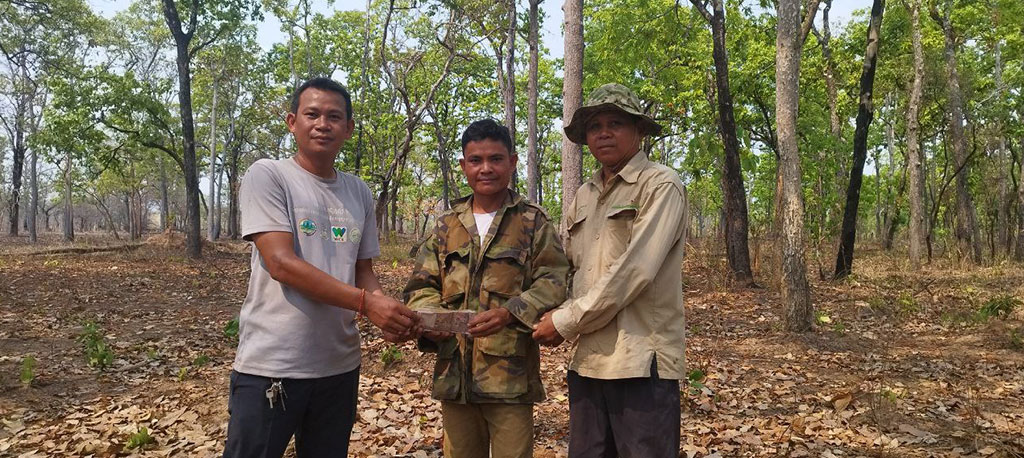
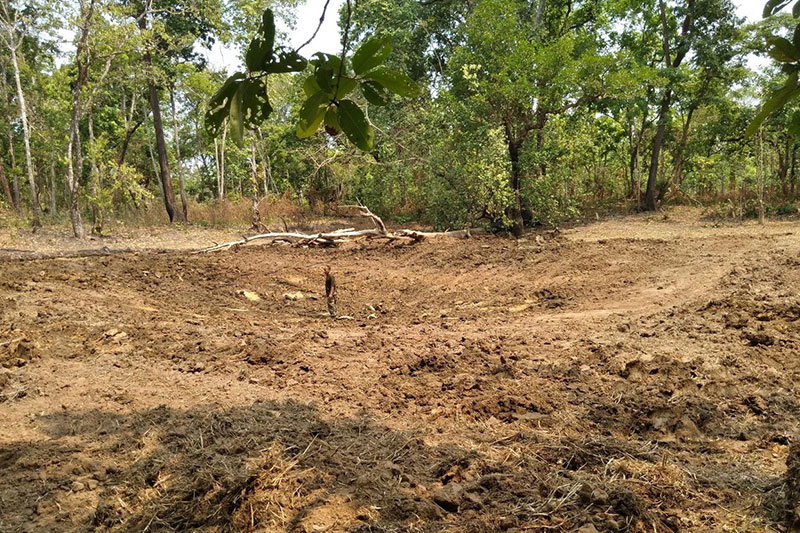
With all above mentions, Cambodia Bird Guide Assocation (CBGA) together with Tmatboey Community with legal support from Provincial Department of Environment of Preah Vihear conducted a modification project on 3-5 May 2024 and as a result 6 forest ponds were modified and deepened under financial support from CBGA.
Inconclusion, forest pond modification is a sustainable approach to combat water scarcity for wildlife during dry seasons. By implementing techniques such as dam construction, vegetation planting, and natural filtration systems, these modified ponds can store water efficiently while creating a thriving ecosystem. Such initiatives not only safeguard the survival of various animal species but also contribute to groundwater recharge and environmental education. Embracing these eco-friendly solutions is crucial in ensuring a harmonious coexistence between humans and wildlife in water-scarce regions.
If you are interested in supporting our projects, please visit Conservation
After a long hibernation during Covid-19 and hard time, CBGA has begun its activities slowly and carefully according to the safety guideline of the Royal Government of Cambodia. Amongst those activities, October Count is a new event for CBGA as well as Cambodia while similar events have happened in countries of the region for years and this event will be organized annually in October at appropriate selected location.
The purpose of the event to collect data of species for the first migration period in the potential area where birds stop to feed during wintertime and this data can help us more for species record and determine where we should discuss with local farmers to give a safe zone for birds under collaboration with CBGA.
Rules and regulations
The rule is the counting should be done with a dimeter of 1km from 6:00am – 6:00pm in the same area and participants can put in the birds they could see and identified both with binoculars and vocalization. The checklist will be published in the blog of CBGA (here) one day after the event.
Participation
This event is for the publics so anyone can join CBGA team to help with the count and without any charge but requested to prepare for their own food and water during the count.
Result for October Bird Count
For 2022, we counted 60 species of birds with 2 records for the first time in the area — White-faced Plover and Sanderling.
Here is a full checklist with number of birds seen:
Spotted Dove 15
Zebra Dove 2
Blue tailed Bee-eater 3
Oriental Pratincole 2000
Barn Swallow 26
Germain’s Swiftlet 38
Little Egret 25
Great Egret 20
Paddy field Pipit 4
Red throated Pipit 2
Eastern Yellow Wagtail 2
Little Comorant 1
Bar tailed Godwit 1
Common Greenshank 3
Black winged Stilt 5
Pacific Golden Plover 25
Little ringed Plover 27
Kentis Plover 2
Lesser Sand Plover 1
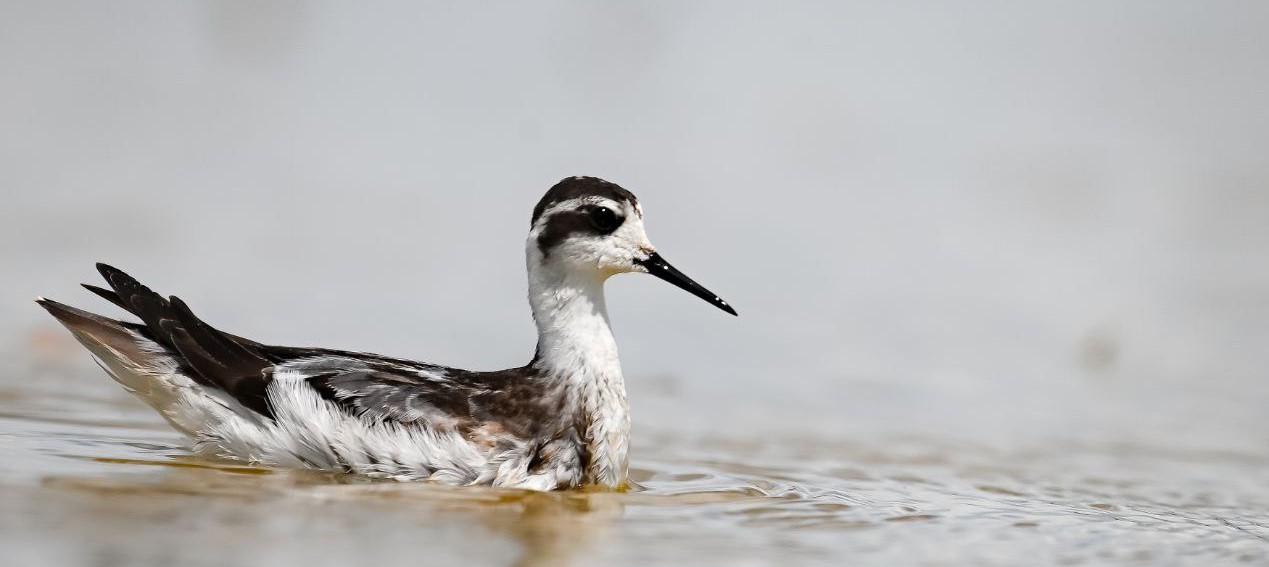
Red necked Phalarope 1
Long toed Stint 9
Tenmink’s Stint 5
Common Snipe 7
Red necked Stint 2
Wood Sandpiper 58
Common Sandpiper 5
Marsh Sandpaper 3
Eastern Jungle Crow 4
Black Drongo 5
Common Myna 10
Great Myna 20
Black collared Starling 2
Whiskered Tern 15
Pied Bushchat 2
Red Turtle Dove 2
Feral Pigeon 50
White winged Tern 1
House Sparrow 1
Scaly breasted Munia 6
Small Pratincole 1
Chinese Pond heronn 5
Intermediate Egret 2
Purple Heron 2
Greater Sand plover 1
White faced Plover ( first record at Chreav 2 )
Terrek Sandpiper 1
Curlew Sandpaper 3
Northern Brown Shrike 1
Cotton Pygmy goose 2
Indian Spot billed Duck 4
Sanderling ( first record at Chreav 3 )
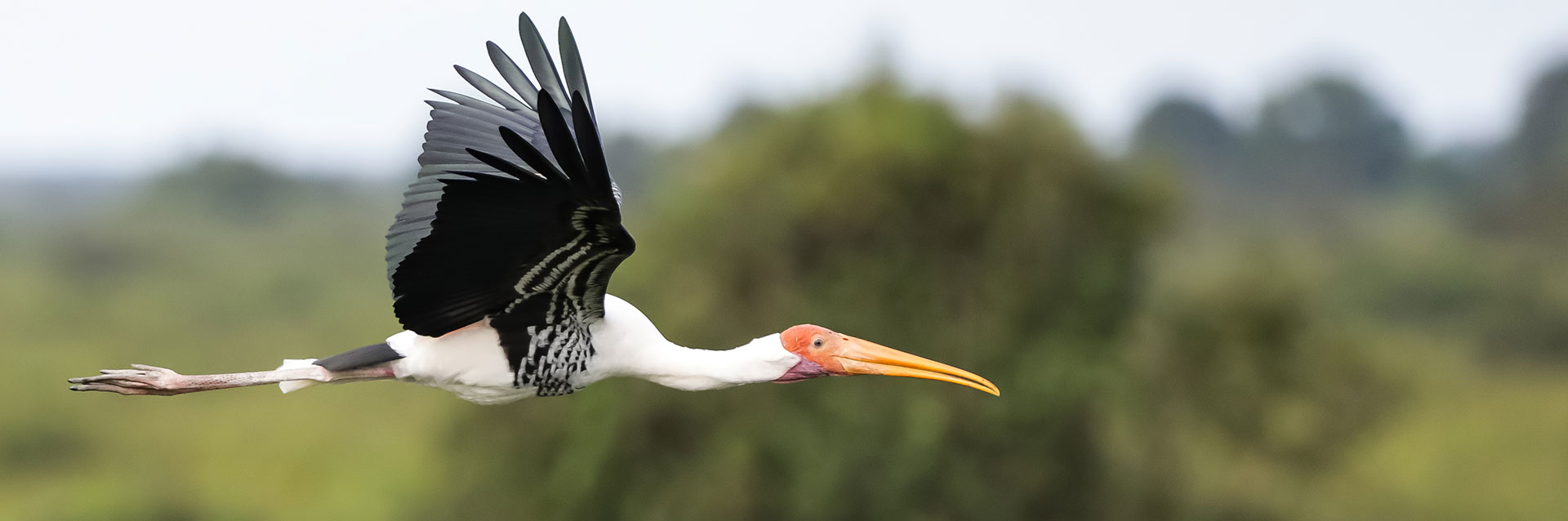
Painted Stork 19
Black winged Kite 2
Pintail Snipe 5
Plaintive Cuckoo 1
Asian Pied Starling 3
Eastern Cattle Egret 1
Red Avadavad 5
Eurasian Tree Sparrow 1
Plain back Sparrow 1
If you are interested to join this event next year or want to organize your own one in your region, you may follow us on Facebook or our website to get the date and location.
Birding in Cambodia, Southeast Asia, with professional bird guides from the Cambodia Bird Guide Association (CBGA), based in Siem Reap, to help you find birds you would like to see. With various trips from half-day to 3-week itinerary in Cambodia.